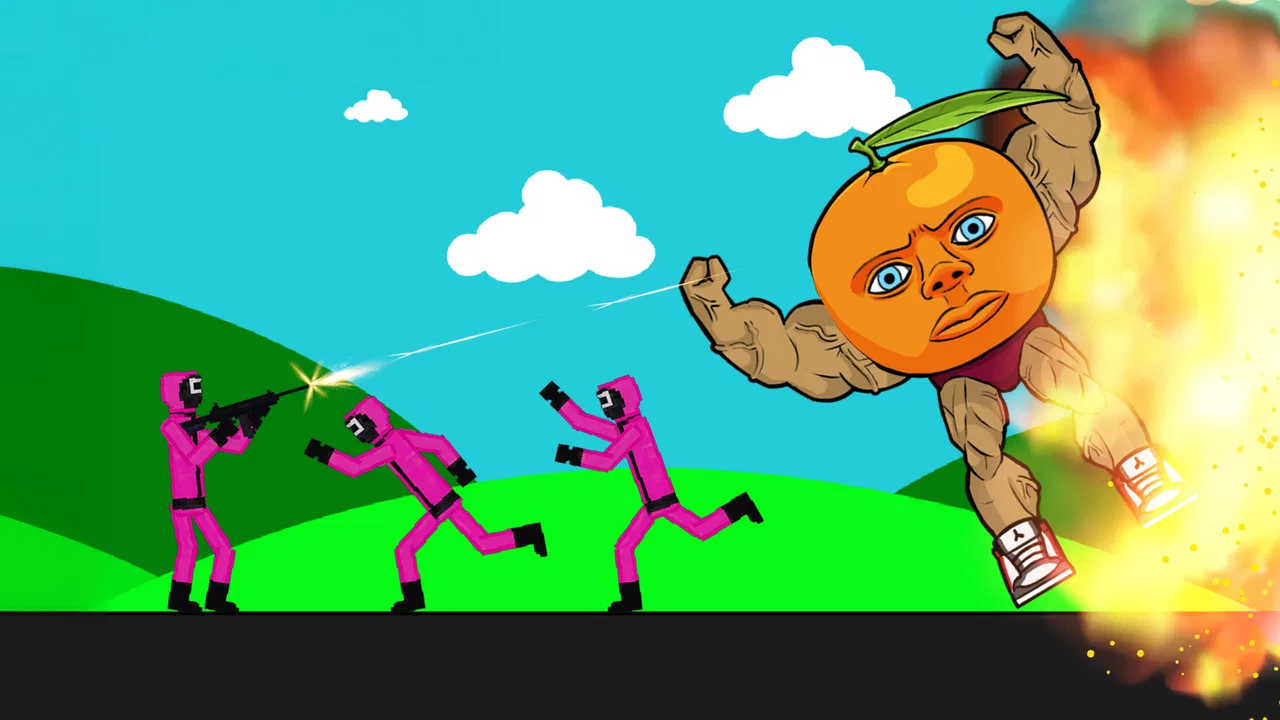
Brainrot Playground
- 3.3
- Rating
- 5.00M
- Installs
- Free
- Price

 Analysis by App-foxy
I approached Brainrot Playground as a quick, open-ended casual game rather than a traditional level-based challenge. Its appeal is easy to understand: you enter a playful sandbox, experiment with what is available, and create little moments of chaos instead of following a strict campaign. That makes it a potentially good fit for short breaks, especially when I want something light that does not demand a long commitment.
It is a free game from Tappy Game, released on December 4, 2024, and it is aimed at Teen players. The current version is 1.0.1, and it runs on Android 7.0 or later. The store summary presents it as a place for creativity and disorder, but the more useful question is whether that freedom actually suits the way you like to play. In my experience, the answer depends less on reflexes and more on whether you enjoy making your own objectives.
How to decide whether the sandbox fits you
The first decision point is structure. If you prefer clear missions, a visible progression path, or a dependable sense of “what should I do next?”, a sandbox can feel vague. Brainrot Playground works better when I treat each session as a small experiment: try an interaction, arrange a scene, repeat something amusing, or simply see how much playful disorder I can create before moving on.
You May Also Like

 Google Keep - Notes and lists
Google Keep’s Quiet Growth Shows the Appeal of Simpler Notes
As mobile work gets busier, Google Keep keeps winning a simple contest: capture a thought quickly, find it later, and get on with the day.

 Blood Strike: 2.5 Anniversary
Blood Strike’s Loadouts Turn Every Drop Into a Tactical Gamble
A close look at Blood Strike’s custom loadouts: how fast access to signature weapons reshapes its battle royale rhythm, rewards preparation, and narrows the gap between fights.

 Pandora - Music & Podcasts
Pandora’s Music Is Easy to Start, but Harder to Recover
Pandora’s strength is its low-effort path from a seed to a station. Its weak spot is how much confidence it asks you to place in connection, setup, and quiet recovery.

 8 Ball Pool
 Is Built on Rivalries, Rematches, and Routine
A close look at the rivalries, rematches, shared routines, and unanswered safety questions that turn a quick pool match into a persistent mobile community.

 Samsung Music
’s Quiet Strength Is Playing What You Already Own
Its reach comes less from spectacle than from dependable access to a personal library. That simplicity is both the app’s strongest retention engine and its ceiling.

 AccuWeather: Weather Radar
AccuWeather Review: A Quick, Clear Forecast for Everyday Decisions
For everyday plans, the best forecast is the one you can understand quickly. AccuWeather makes rain timing, radar, and local conditions easy to act on, with a few trade-offs.
More From Our News Desk



That difference matters when comparing it with other casual games. A puzzle game usually gives me a defined problem and a satisfying solution. An endless runner gives me a familiar loop built around timing and distance. A physics toy gives me experimentation, but often with a more focused set of tools. This game sits closer to the freeform side of that spectrum. Its strongest moments come from player-directed activity rather than from a carefully paced sequence of objectives.
I would also consider how long you normally play on a phone. For a five-minute wait, the lack of a heavy setup is useful. For a longer evening session, the experience may depend on how much imagination you bring to it. Players who enjoy inventing scenarios can keep finding reasons to return, while players who need constant rewards may run out of momentum sooner.
The audience signal is worth taking seriously. The game is marked Teen, so I would not choose it automatically for younger children simply because the presentation looks casual. Parents should check the store page and the device experience themselves before handing it over. The age label is part of the decision, not a detail to ignore because the game is presented as playful.
What I look for during the first session
My first test with a sandbox game is not whether it looks busy. I want to know whether experimenting feels understandable. Can I quickly tell what the environment is for? Do interactions invite me to try something else, or do they feel like isolated taps? Does the game reward curiosity even when I am not pursuing a conventional goal?
That is the right mindset here. Rather than waiting for the game to explain a complete route, I would spend the opening session testing the boundaries of the playground. Try the obvious interaction first, then repeat it in a different context. Change one thing at a time so you can tell what caused a result. This sounds simple, but it is a more effective way to judge a freeform game than tapping randomly and deciding after a minute that it has no depth.
A useful personal rule is to give it a few short sessions instead of one long trial. Sandbox appeal often grows when I remember an amusing setup and return to improve it. If every session feels like searching for content that is not there, that is a strong sign that a more structured casual title would serve you better.
Where the open format is most enjoyable
The game’s best use case is casual creative play. I can imagine opening it while waiting for an appointment, building a silly situation, and closing it without worrying about losing a long run or forgetting a complicated story. That low-pressure rhythm is valuable for people who want interaction without the commitment of a full adventure game.
It can also work as a shared “look what happens if…” experience. A friend or family member can suggest an idea, and I can try to reproduce it in the playground. This is not the same as a multiplayer feature, and I would not assume that direct cooperation exists. The value is simply that a freeform scene can be discussed, imagined, and tested together while one person holds the device.
Another strength is the room it leaves for self-imposed challenges. Instead of asking only whether the game has enough official content, I would ask whether you enjoy setting small targets: create a particular kind of scene, repeat a funny chain of events, or find a more efficient way to arrange an experiment. These goals are personal, so they do not require invented claims about progression systems or rewards.
The key strength is not a checklist of missions; it is the permission to make your own reason to play. That can feel refreshing after a day of games that constantly tell me what to collect, unlock, or complete.
Where Brainrot Playground wins, and where it does not
Compared with a conventional casual game, this one wins on immediacy and freedom. There is less pressure to perform perfectly, and a failed experiment can still be entertaining. That makes it a better choice for players who see games as toys as much as challenges. I also like that the concept is easy to explain: it is a place to play around, not a complicated system that needs a long tutorial.
That simplicity has a trade-off. In a puzzle title, the level designer supplies the next question. In a runner, the increasing speed supplies tension. In a sandbox, I supply much of the motivation. If I am tired and do not feel like inventing a scenario, the game may not give me enough direction to pull me back in.
I would therefore compare it with alternatives by mood rather than by a universal ranking. Choose a puzzle game when you want a clear mental task. Choose a runner when you want immediate reflex-based pressure. Choose a story-driven casual game when characters and progression matter more than experimentation. Choose this playground when you want to poke at a playful environment and decide for yourself what counts as a successful session.
That comparison also explains who should skip it. Players looking for a deep narrative, competitive matchmaking, or a carefully escalating challenge should not install it expecting those experiences. Likewise, if you dislike games that can feel open-ended or slightly directionless, the freeform design may become frustrating rather than relaxing.
Practical habits that make the game easier to judge
My first practical tip is to start with a specific intention. “I will test one interaction in three different situations” is better than “I will see what is here.” A small experiment gives the session shape without turning the game into homework. Once you understand the basic rhythm, you can decide whether the freedom feels rewarding.
My second tip is to treat amusing accidents as useful information. In a conventional game, an unexpected result may look like failure. In a playground, it can reveal what makes the environment interesting. When something surprising happens, repeat the setup before moving on. Reproducibility is a better measure of sandbox depth than a single lucky moment.
Third, I would avoid judging the game solely by its store summary. “Brainrot Playground” is a short description, not an explanation of how you personally should use the app. The real test is whether the available play space supports your preferred kind of experimentation. If you need a goal, create one for the session; if that feels artificial after several attempts, accept that the category may not be right for you.
Finally, watch how you respond to the game’s pacing. A sandbox should not need to be rushed. If you find yourself tapping quickly just to force something to happen, slow down and test one change at a time. That approach can make the experience more readable and helps separate a genuinely enjoyable discovery from random screen activity.
Free to start, with purchases to consider
The game is free to download, which makes trying it relatively straightforward. It includes in-app purchases ranging from $0.99 to $29.99 per item. That price range is important because “free” does not necessarily mean the complete experience has no spending decisions. I would enter the game with a clear personal limit, especially if the device is shared or used by younger players.
I would not make a purchase simply because I felt bored during the first session. First decide whether the basic sandbox loop is enjoyable on its own. If the core activity does not hold your attention without spending, buying an item is unlikely to solve the underlying mismatch. A purchase can make sense only when you already understand what you are getting and why it improves the way you play.
There is also a practical switching cost when moving from a more structured casual game. In a level-based alternative, your time is organized for you. Here, you may need to invest attention in learning your own routines and remembering which experiments were worthwhile. That is not a financial cost, but it is a real one: the game asks for curiosity and patience instead of simply delivering a sequence of tasks.
The reverse switch can be revealing. If you leave this game for a puzzle or runner, you may gain clearer goals and faster feedback, but lose the freedom to create unusual situations. If you leave it for a larger sandbox experience, you may gain more depth, but also face a heavier commitment. Brainrot Playground occupies the lighter end of that decision, and that is both its convenience and its limitation.
Performance expectations and version awareness
Because the minimum requirement is Android 7.0, the game is positioned to work across a broad range of Android devices. That does not guarantee identical results on every phone or tablet. Screen size, storage condition, background apps, and device age can all affect how comfortable a casual game feels. I would close unnecessary apps before judging responsiveness, particularly on an older device.
The current version is 1.0.1, so I would keep expectations realistic about how mature the experience feels. A newer game can be appealing precisely because its concept is fresh, but early versions may also feel less polished than long-established alternatives. I would check for updates before playing and pay attention to whether later sessions feel smoother or more complete.
The public response is mixed: the game holds a 3.1 average from around 1.5 thousand ratings, alongside 58 written reviews. I read that as a reason to be selective rather than as an automatic rejection. The rating suggests that the freeform concept will not satisfy everyone, which matches my own view that the game depends heavily on personal taste. Its reach is substantial, with over 5 million installs, but popularity alone does not make it the right choice for a player who needs structured progression.
My recommendation after weighing the trade-offs
I recommend Brainrot Playground to players who enjoy casual experimentation, silly setups, and making their own short-term objectives. It is especially suitable when you want a free game that can be opened for a brief session without demanding a full story or a competitive commitment. The best experience comes from approaching it as a digital toy: test, observe, repeat, and keep the moments that make you smile.
I would be more cautious if your ideal casual game has a strong campaign, obvious milestones, or a reliable feeling of improvement from one session to the next. In those cases, a puzzle, runner, or other structured alternative is likely to feel more satisfying. I would also skip it if the Teen content rating does not suit the person who will use the device, or if you are uncomfortable managing optional purchases.
For everyone else, the sensible approach is to try the free version without rushing to spend. Give yourself several focused experiments, decide whether the open format creates genuine amusement, and only then consider whether any purchase is worthwhile. That process answers the important questions: whether the game is enjoyable on your device, whether its freedom feels creative or empty, and whether it offers enough variety for your habits.
My final view is positive but deliberately limited. This is not the casual game I would choose for a demanding challenge or a long-form adventure. I would choose it when I want a low-pressure playground and have enough curiosity to make the session my own. It succeeds when you want to play with possibilities, not when you need the game to provide every objective for you.
FAQs for Brainrot Playground
01What is Brainrot Playground, and what can I expect from it?
Brainrot Playground is an innovative puzzle and strategy game available on both Android and iOS platforms. Players are tasked with solving complex puzzles that challenge their logic and creativity. Expect immersive gameplay with a variety of levels that increase in difficulty, offering hours of engaging entertainment.
02Is Brainrot Playground suitable for all age groups?
While Brainrot Playground is designed to be accessible to a wide audience, its complex puzzles might be more suitable for older children and adults. It requires critical thinking and problem-solving skills, making it an excellent choice for those who enjoy mental challenges. Parental guidance is advised for younger players.
03Does Brainrot Playground require an internet connection to play?
Brainrot Playground can be enjoyed both online and offline. While some features, like leaderboards and updates, require an internet connection, the core gameplay is accessible without it. This makes it a great option for gaming on the go, especially when traveling or in areas with limited connectivity.
04What are the in-app purchases available in Brainrot Playground?
Brainrot Playground offers optional in-app purchases that enhance the gaming experience. These may include additional puzzle packs, hints, or cosmetic items. However, the game is designed to be fully enjoyable without spending money, ensuring that all players can progress through skill alone.
05How does Brainrot Playground handle user data and privacy?
Brainrot Playground prioritizes user privacy by adhering to strict data protection standards. It only collects essential data to enhance gameplay and ensure a seamless experience. Users have control over their data preferences, and detailed privacy policies are available within the app, complying with regulations like GDPR and CCPA.
Pros
- Engaging puzzles keep you hooked.
- Minimalist design enhances focus.
- Frequent updates with new levels.
- Offline mode available for travel.
- Adaptive difficulty challenges players.
Cons
- Some puzzles feel repetitive.
- Limited hints can cause frustration.
- Ads can interrupt gameplay.
- Requires in-app purchases for extras.
- No multiplayer or social features.

Brainrot Playground
Gallery